

Are you looking to feel more energetic, improve your mood, and stay healthier for longer? Eating a balanced diet is one of the simplest ways to achieve all this and more.
When you fuel your body with the right mix of nutrients, you give yourself the power to perform better every day. Imagine waking up refreshed, focusing more clearly, and warding off illnesses with ease. You’ll discover how a balanced diet can transform your life and why it’s easier to start than you might think.
Keep reading to unlock the secrets to better health through smart eating choices.
Essentials Of A Balanced Diet
A balanced diet supplies the body with all nutrients in the right amounts. It supports energy, growth, and overall health. Eating a variety of foods helps meet these nutritional needs every day.
Understanding the essentials of a balanced diet guides better food choices. It includes knowing about macronutrients, micronutrients, portion control, and meal timing. Each part plays a key role in nourishing the body properly.
Macronutrients And Micronutrients
Macronutrients are carbohydrates, proteins, and fats. They provide energy and build body tissues. Carbohydrates fuel the brain and muscles. Proteins repair cells and support immune function. Fats protect organs and help absorb vitamins.
Micronutrients include vitamins and minerals. They help with bone health, blood clotting, and energy production. Eating fruits, vegetables, nuts, and dairy ensures enough micronutrients. Both macro and micronutrients must be balanced for good health.
Portion Control And Meal Timing
Portion control means eating the right amount of food. Too much or too little can cause problems. Balanced portions prevent weight gain and provide steady energy. Using smaller plates or measuring food helps keep portions in check.
Meal timing is about when to eat. Regular meals keep blood sugar stable. Skipping meals can lead to overeating later. Eating at consistent times supports digestion and metabolism. Small, frequent meals may benefit some people.
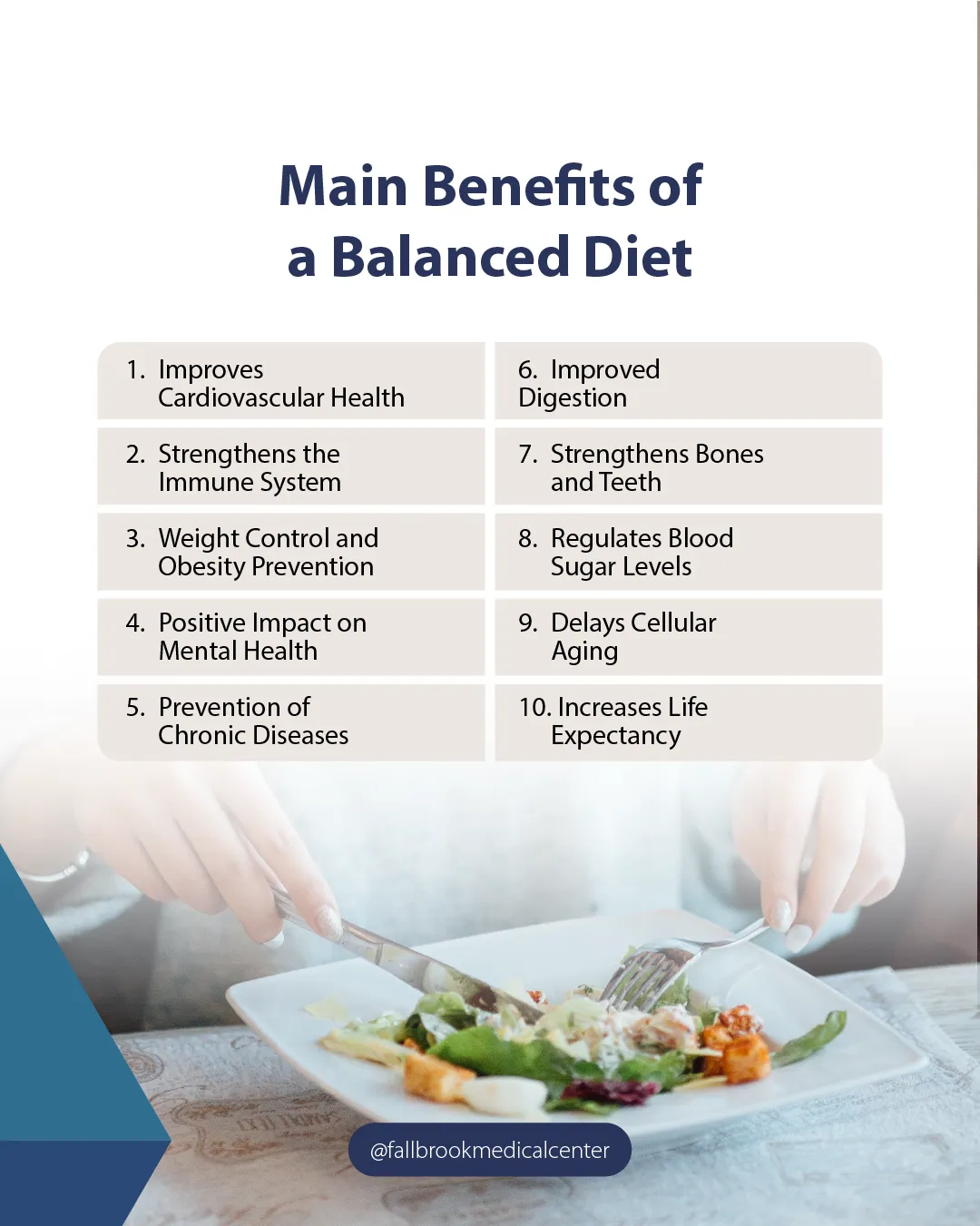
Credit: www.fallbrookmedicalcenter.com
Boosting Energy Levels
Eating a balanced diet helps keep energy levels steady throughout the day. It provides the right nutrients your body needs to work well. Feeling tired and sluggish often happens when the body lacks proper fuel. Balanced meals support your body’s natural energy cycle. This means you can stay alert and active longer without crashes.
Steady Blood Sugar Management
Balanced meals help keep blood sugar levels stable. Foods with fiber, protein, and healthy fats slow down sugar absorption. This prevents sudden spikes and drops in blood sugar. Stable blood sugar means fewer energy crashes and better focus. Your body gets a smooth supply of energy all day.
Improved Metabolism
A balanced diet supports a healthy metabolism. Eating enough protein helps build muscle and burn calories. Vitamins and minerals from fruits and vegetables aid energy production. Proper metabolism turns food into energy efficiently. This helps you feel energetic and ready for daily tasks.
Enhancing Immune Function
Eating a balanced diet helps your immune system work well. A strong immune system defends your body from germs. Good nutrition gives your body what it needs to fight sickness. Simple food choices can boost your health and keep you well.
Key Vitamins And Minerals
Vitamins and minerals play a big part in immune health. Vitamin C helps white blood cells work better. Vitamin D supports the immune system’s response to threats. Zinc helps heal wounds and fight infections. Iron carries oxygen to cells, aiding immune functions. Eating fruits, vegetables, nuts, and lean meats provides these nutrients.
Role Of Antioxidants
Antioxidants protect your cells from damage caused by free radicals. They reduce inflammation and support immune health. Foods like berries, spinach, and nuts are rich in antioxidants. These nutrients help your body recover and stay strong. A diet full of antioxidants keeps your defense system ready.
Supporting Mental Health
Eating a balanced diet helps support mental health by giving the brain the nutrients it needs. A well-fed brain works better, thinks clearly, and feels calmer. Food affects mood and energy levels every day. Choosing the right foods can improve focus and reduce stress.
Nutrients For Brain Function
The brain needs vitamins and minerals to stay healthy. Omega-3 fatty acids found in fish help build brain cells. B vitamins support energy and memory. Antioxidants from fruits and vegetables protect brain cells from damage. Protein provides the amino acids needed for brain signals. Drinking enough water keeps the brain sharp and alert.
Mood Regulation
Food influences brain chemicals that control mood. Complex carbohydrates like whole grains help produce serotonin, the “feel-good” hormone. Magnesium and zinc, found in nuts and seeds, reduce anxiety. Avoiding too much sugar and processed food prevents mood swings. A balanced diet helps keep emotions steady and stress low.
Maintaining a Healthy Weight
Maintaining a healthy weight is important for overall health and energy. Eating a balanced diet helps control weight by giving the body the right amount of nutrients and calories. It supports body functions and keeps hunger in check. A stable weight lowers the risk of diseases like diabetes and heart problems. Simple, healthy eating habits lead to lasting weight management.
Balanced Nutrient Intake
A balanced diet includes all food groups in the right amounts. Carbohydrates, proteins, fats, vitamins, and minerals each play a key role. This balance fuels the body without excess calories. It helps muscles, organs, and the brain work well. Proper nutrients keep metabolism steady and prevent weight gain.
Preventing Overeating
Eating balanced meals prevents feelings of extreme hunger. Meals with fiber, protein, and healthy fats make you feel full longer. This stops overeating and unnecessary snacking. Regular, balanced eating reduces cravings for unhealthy foods. It keeps energy levels even and supports healthy weight control.
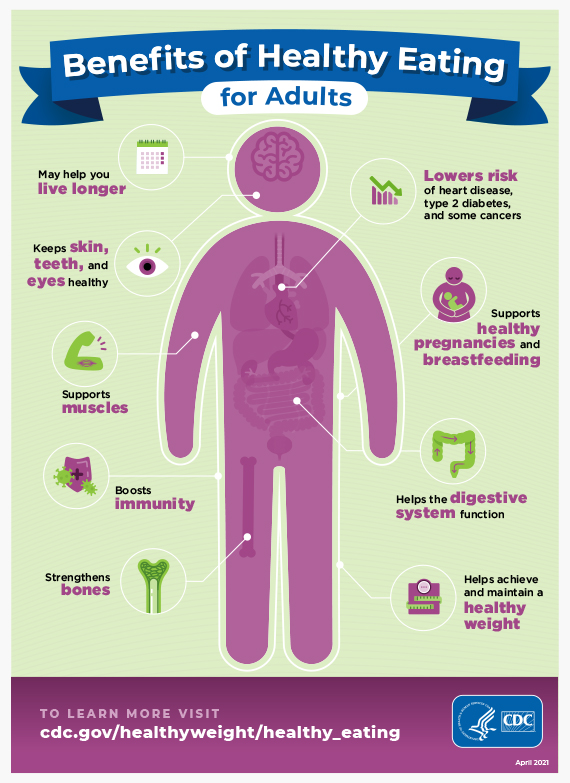
Credit: cedwvu.org
Promoting Heart Health
Eating a balanced diet helps keep the heart strong and healthy. It provides the right nutrients to support heart functions. Good food choices can lower the risks of heart problems. A healthy heart means better energy and a longer life.
Healthy Fats And Cholesterol
Healthy fats help control cholesterol levels. Foods like nuts, seeds, and fish contain good fats. These fats lower bad cholesterol, which clogs arteries. Good cholesterol helps remove bad cholesterol from the body. Balanced fat intake protects the heart and blood vessels. It helps keep blood flowing smoothly and reduces heart disease risk.
Reducing Blood Pressure
A balanced diet helps keep blood pressure in check. Eating fruits and vegetables provides potassium, which lowers blood pressure. Whole grains and low-fat dairy also help control pressure. Reducing salt intake is important for healthy blood pressure. Lower blood pressure means less strain on the heart. This reduces the chance of heart attacks and strokes.
Improving Digestion
Eating a balanced diet helps your digestion work better. Good digestion means your body can absorb nutrients well. It also helps prevent stomach problems like bloating and constipation.
Fiber’s Role
Fiber is a key part of a balanced diet. It adds bulk to your stool, making it easier to pass. Fiber also helps food move through your digestive system faster.
There are two types of fiber: soluble and insoluble. Soluble fiber dissolves in water and feeds good gut bacteria. Insoluble fiber helps push waste through the intestines.
Gut Health
The gut has many bacteria that help digestion. Eating a balanced diet supports these good bacteria. They break down food and produce vitamins your body needs.
Foods like yogurt, fruits, and vegetables keep your gut bacteria healthy. A healthy gut helps reduce inflammation and keeps your digestion smooth.
Long-term Wellness Benefits
Eating a balanced diet supports your body’s health over many years. It helps keep your organs working well and boosts your energy daily. This kind of diet includes fruits, vegetables, whole grains, lean proteins, and healthy fats. These foods provide the nutrients your body needs to stay strong and fight illness. Long-term wellness is about feeling good and avoiding health problems as you age. Let’s explore some key benefits of a balanced diet for lasting health.
Chronic Disease Prevention
A balanced diet lowers the risk of many chronic diseases. Heart disease, diabetes, and some cancers can be prevented by healthy eating. Nutrients like fiber, vitamins, and antioxidants protect your body’s cells. They reduce inflammation and help control blood sugar levels. Eating less processed food and more natural food supports your immune system. This helps your body resist illness and recover faster. Healthy eating habits build a strong defense against long-term health issues.
Longevity And Quality Of Life
Balanced eating contributes to a longer life with better health. It keeps your bones, muscles, and brain working well. Good nutrition improves sleep, mood, and mental clarity. It lowers the chance of frailty and disability in old age. People who eat well often enjoy more active and independent lives. Quality of life means feeling good and doing daily activities with ease. A balanced diet helps maintain vitality and happiness for many years.
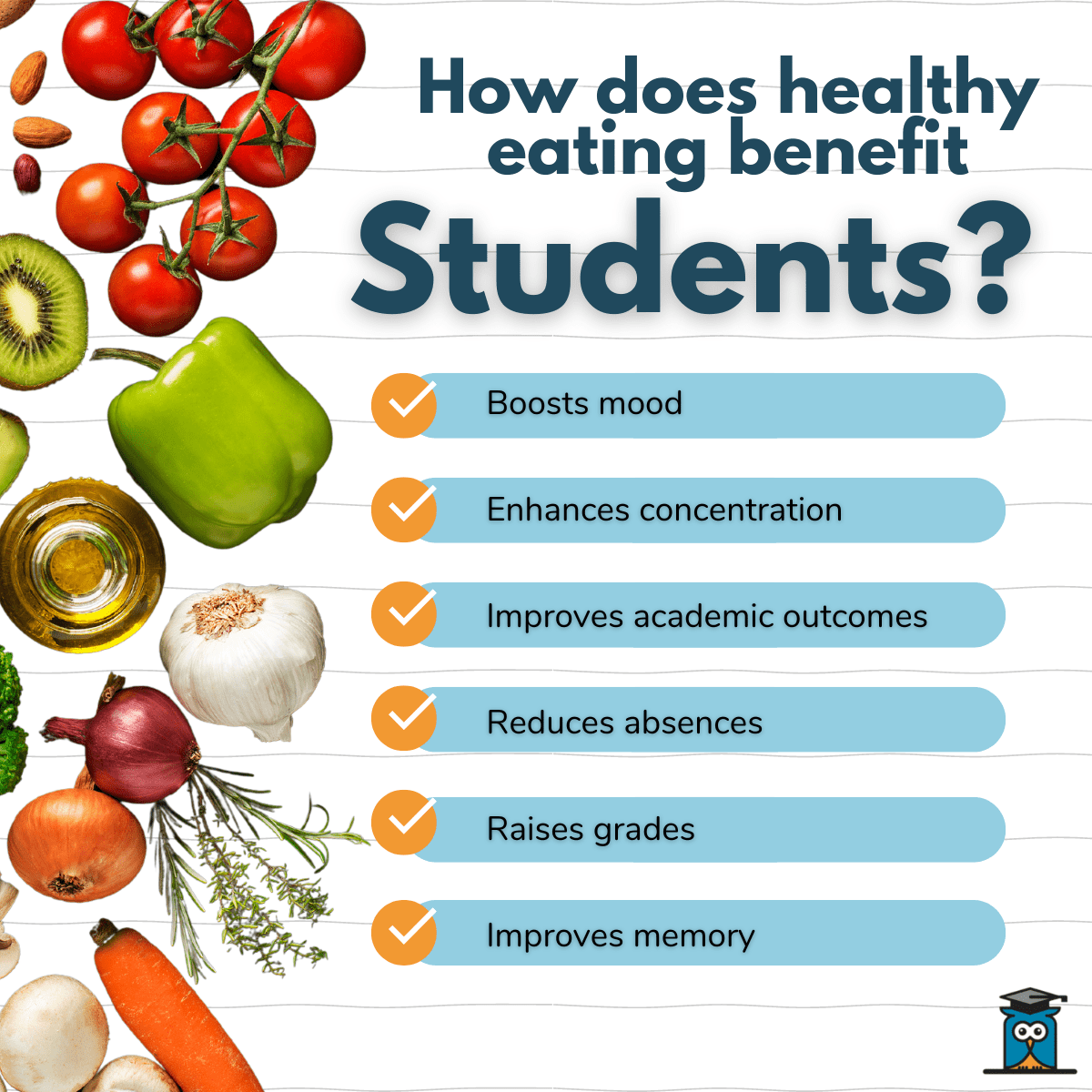
Credit: myprivateprofessor.com
Frequently Asked Questions
What Are The Key Benefits Of Eating A Balanced Diet?
A balanced diet provides essential nutrients, boosts energy, supports immune function, and promotes a healthy weight. It reduces the risks of chronic diseases and improves overall well-being by maintaining proper body functions and mental health.
How Does A Balanced Diet Improve Mental Health?
Eating a balanced diet supplies brain nutrients like omega-3, vitamins, and minerals. These support cognitive function, reduce anxiety, and enhance mood stability, helping to prevent depression and mental fatigue.
Can A Balanced Diet Help With Weight Management?
Yes, a balanced diet controls calorie intake and provides essential nutrients. It promotes fat loss, preserves muscle mass, and reduces unhealthy cravings, making weight management more effective and sustainable.
Which Foods Are Essential For A Balanced Diet?
A balanced diet includes fruits, vegetables, whole grains, lean proteins, and healthy fats. These foods provide vitamins, minerals, fiber, and antioxidants necessary for optimal health and disease prevention.
Conclusion
Eating a balanced diet helps keep your body strong and healthy. It gives you energy to do daily tasks easily. Good nutrition supports your immune system and fights sickness. Your mind also works better with the right foods. Choosing fruits, vegetables, proteins, and grains brings many health benefits.
Small changes in meals can make a big difference. Start simple, and enjoy feeling better each day. Healthy eating is a smart step toward a happier life.