

Are you ready to get fit without any fancy equipment or gym memberships? Bodyweight exercises for beginners are the perfect way to start building strength, improving flexibility, and boosting your energy—all from the comfort of your home.
Imagine feeling stronger and more confident with every move you make. You’ll discover simple yet powerful exercises designed just for you. Stick with me, and by the end, you’ll have a clear plan to transform your body and feel great every day.
Let’s dive in!
Benefits Of Bodyweight Exercises
Bodyweight exercises offer many benefits for beginners. They use your own weight to build strength and improve fitness. No special equipment is needed. These exercises help your body become stronger and more flexible over time.
Improved Strength And Flexibility
Bodyweight exercises help build muscle and improve joint flexibility. Movements like squats and push-ups work multiple muscles at once. Stretching during these exercises increases your range of motion. This combination makes daily activities easier and reduces stiffness.
Convenience And Accessibility
These exercises can be done anywhere and anytime. No gym or special tools are required. You can exercise at home, in a park, or while traveling. This ease makes it simple to stay consistent and develop a workout habit.
Reduced Injury Risk
Bodyweight exercises use natural movement patterns. This lowers the chance of injury compared to heavy lifting. You can control the intensity and pace easily. Beginners can start slow and build strength safely without strain.
Essential Moves For Beginners
Starting with bodyweight exercises can build strength and confidence. These moves need no equipment. They help improve balance and flexibility. Focus on form to avoid injury and get the best results.
Try these essential exercises. They target major muscle groups. Perfect for beginners looking to create a strong fitness base.
Squats For Lower Body
Squats work your legs and glutes. Stand with feet shoulder-width apart. Keep your back straight. Lower your body like sitting in a chair. Stop when your thighs are parallel to the floor. Push through your heels to stand back up. Squats improve strength and stability in your lower body.
Push-ups For Upper Body
Push-ups build chest, shoulder, and arm muscles. Start in a plank position with hands under shoulders. Keep your body straight from head to heels. Lower your chest toward the floor by bending your elbows. Push back up to the start position. Modify by doing push-ups on your knees if needed.
Planks For Core Strength
Planks strengthen your core and back muscles. Begin in a forearm plank position. Elbows under shoulders, body in a straight line. Tighten your abs and hold the position. Avoid letting your hips drop. Hold for 20 to 30 seconds. Increase time as you get stronger.
Proper Form Tips
Proper form is key to getting the best results from bodyweight exercises. It keeps you safe from injury and helps you work the right muscles. Paying attention to how your body moves can make each exercise more effective. This section covers simple tips to keep your form correct.
Maintaining Alignment
Keep your head, neck, and spine in a straight line. Avoid letting your back sag or arch too much. Tighten your core to support your lower back. Check that your shoulders are not hunched or too far forward. Good alignment helps your muscles work better and protects your joints.
Breathing Techniques
Breath control supports your strength and focus. Inhale deeply before starting a movement. Exhale slowly as you push or lift your body. Avoid holding your breath during exercises. Steady breathing keeps oxygen flowing and reduces fatigue.
Avoiding Common Mistakes
Do not rush through exercises. Slow, controlled movements improve form and muscle activation. Avoid locking your joints, especially elbows and knees. Keep your movements smooth and steady. Stop if you feel pain or discomfort beyond normal muscle burn.
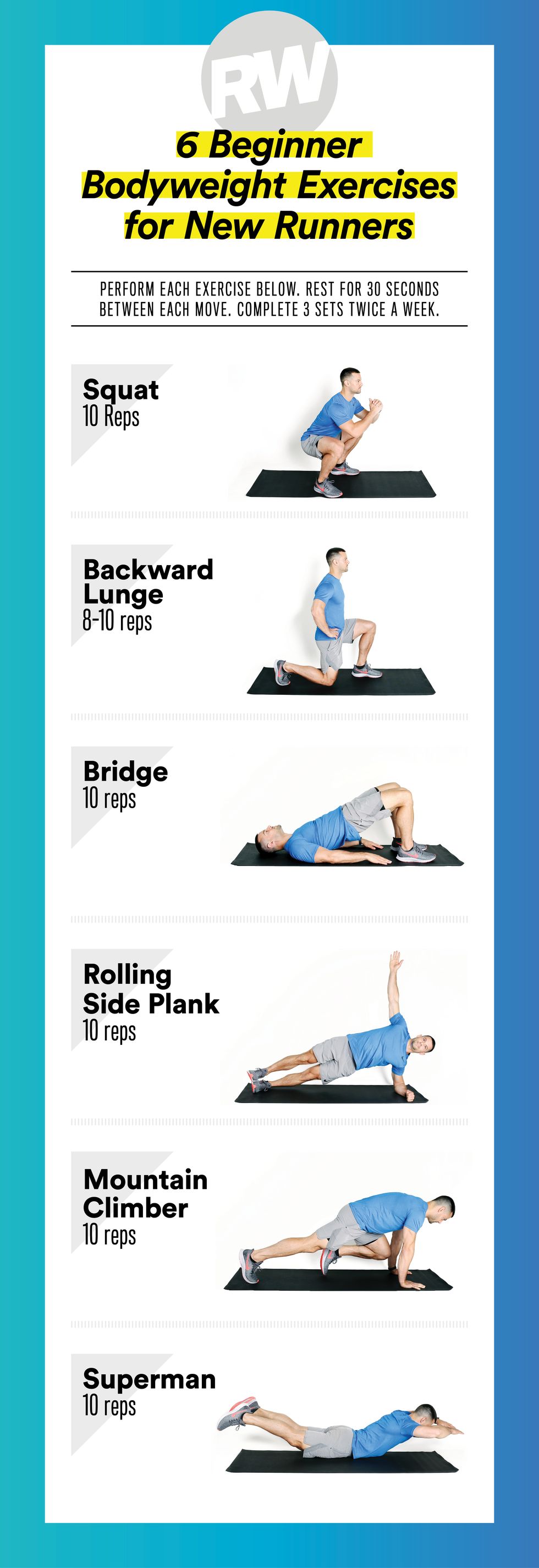
Credit: www.runnersworld.com
Creating A Beginner Routine
Starting a bodyweight exercise routine can feel simple, but it needs a clear plan. A beginner routine helps your body adapt safely. It builds strength and confidence over time. Planning your workouts avoids injury and keeps you motivated.
Setting Realistic Goals
Set small goals that you can reach. For example, aim to exercise three days a week. Focus on improving your form before adding more reps. Celebrate small wins like doing one push-up or holding a plank for 10 seconds. Realistic goals keep you motivated and prevent burnout.
Balancing Exercise Types
Include exercises that work different muscles. Combine pushing moves like push-ups with pulling moves like rows. Add leg exercises such as squats and lunges. Don’t forget core work, like planks or bridges. Balance helps your body develop evenly and reduces the risk of injury.
Sample Weekly Plan
Start with three workout days per week. Day one: push-ups, squats, and planks. Day two: rest or light walking. Day three: lunges, glute bridges, and bird dogs. Day four: rest or stretching. Repeat this cycle, increasing reps slowly. This simple plan builds strength steadily without overwhelming you.
Progressing Safely
Progressing safely in bodyweight exercises is key to steady improvement. It helps avoid injuries and keeps motivation high. Small, careful steps build strength and confidence. Patience pays off in lasting fitness.
Increasing Reps And Sets
Start by adding more repetitions to each set. For example, if you do 10 push-ups, try 12 next time. Slowly increase the number of sets, too. This method improves endurance and muscle strength. Avoid big jumps to reduce strain.
Adding Variations
Try new versions of exercises to challenge your body differently. For push-ups, switch to knee push-ups or incline push-ups. For squats, try jump squats or wide-stance squats. Variations target muscles in new ways and keep workouts interesting.
Listening To Your Body
Pay attention to how your body feels during exercise. Stop if you feel sharp pain or extreme discomfort. Rest is important for recovery and growth. Avoid pushing too hard, too fast. Your body knows best when to slow down.

Credit: www.liftingitalia.com
Common Challenges And Solutions
Starting bodyweight exercises can bring challenges. These common issues might slow progress. Knowing simple solutions helps keep you on track. This section covers soreness, motivation, and time management.
Dealing With Soreness
Soreness is normal for beginners. Muscles need time to adapt. Drink plenty of water to ease discomfort. Stretch gently before and after workouts. Rest days help muscles recover and grow. Use light activities like walking to reduce stiffness. Avoid pushing too hard on sore days.
Staying Motivated
Motivation can drop during the first weeks. Set small, clear goals to stay focused. Track your progress with a journal or app. Celebrate small wins to keep spirits high. Find a workout buddy for support and fun. Change exercises to avoid boredom. Remind yourself why you started.
Finding Time To Exercise
Busy schedules make exercise tough. Break workouts into short sessions of 10-15 minutes. Use bodyweight exercises that need no equipment. Plan your workouts at the same time daily. Choose simple routines that fit your day. Prioritize exercise as part of self-care. Small efforts add up to big results.

Credit: www.knicholastraining.com
Frequently Asked Questions
What Are The Best Bodyweight Exercises For Beginners?
The best bodyweight exercises for beginners include squats, push-ups, lunges, planks, and glute bridges. These moves build strength and improve flexibility without equipment. They are easy to modify and effective for all fitness levels.
How Often Should Beginners Do Bodyweight Exercises?
Beginners should perform bodyweight exercises 3 to 4 times per week. This frequency allows muscle recovery and steady progress. Each session can last 20 to 30 minutes, focusing on proper form and gradually increasing intensity.
Can Bodyweight Exercises Build Muscle Effectively?
Yes, bodyweight exercises can build muscle effectively. They use your body weight as resistance, promoting strength and endurance. Consistent training with progressive overload and proper nutrition enhances muscle growth without gym equipment.
Are Bodyweight Workouts Suitable For Weight Loss?
Bodyweight workouts are excellent for weight loss. They increase heart rate and burn calories while toning muscles. Combining these exercises with a balanced diet accelerates fat loss and improves overall fitness.
Conclusion
Starting bodyweight exercises builds strength and confidence. You need no special gear or gym. Small steps lead to big improvements over time. Consistency helps your body adapt and grow. Enjoy the process and listen to your body. Everyone can improve at their own pace.
Keep practicing to see steady progress. Simple moves can make a big difference daily. Your fitness journey begins with these easy exercises. Stay motivated and keep moving forward.